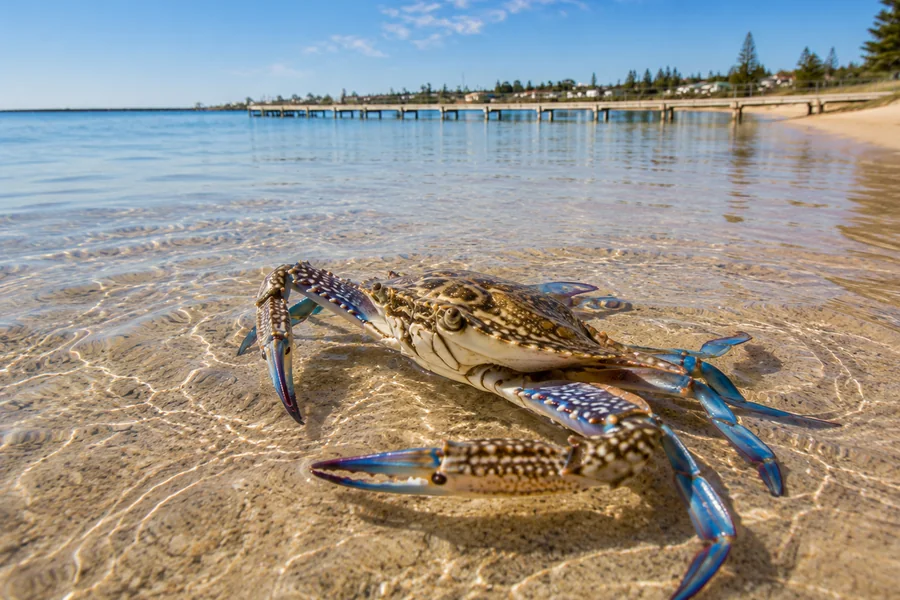
Blue Swimmer Crab in the clear shallows of Oyster Bay near Stansbury Jetty
Blue swimmers · raking · drop netsOyster Bay · Stansbury Jetty

Practical coastal guide

Crabbing in Stansbury, Yorke Peninsula: Blue Swimmer Crabs, Best Spots & Season

Yorke Peninsula crabbing · Oyster Bay shallows · Stansbury Jetty · season, tides and rules

On the Gulf St Vincent side of Yorke Peninsula, Stansbury gives shore-based crabbers two straightforward options: rake the sheltered shallows of Oyster Bay when the water is low enough to work comfortably, or use a legal hoop or drop net from Stansbury Jetty. This page brings the local spots, seasonal timing and current South Australian Blue Swimmer Crab rules together in one place.

Stansbury crabbing on Yorke Peninsula — at a glance

Main windowWarmer months · strongest visitor season around summer
RakingOyster Bay shallows · low water makes the flats easier to work
JettyLegal hoop or drop nets · fish or fish-based bait only
Legal sizeBlue Swimmer Crab · minimum 11 cm across the carapace

Blue Swimmer Crabs are part of the classic Yorke Peninsula summer experience, and Stansbury is one of the most practical towns for trying two shore-based methods without needing a boat. Its sheltered Oyster Bay setting on Gulf St Vincent gives you a choice between active raking in shallow water and stationary netting from the jetty.

The important part is matching the method to the conditions. Low water helps when you are trying to reach and search the shallow flats with a rake, while jetty netting is less dependent on exposing the flats and more dependent on keeping a legal net fishing cleanly. Whichever method you choose, measure every crab as soon as it is caught, use legal bait and keep the daily limits in mind from the start.

Why Stansbury works as a Yorke Peninsula crabbing base

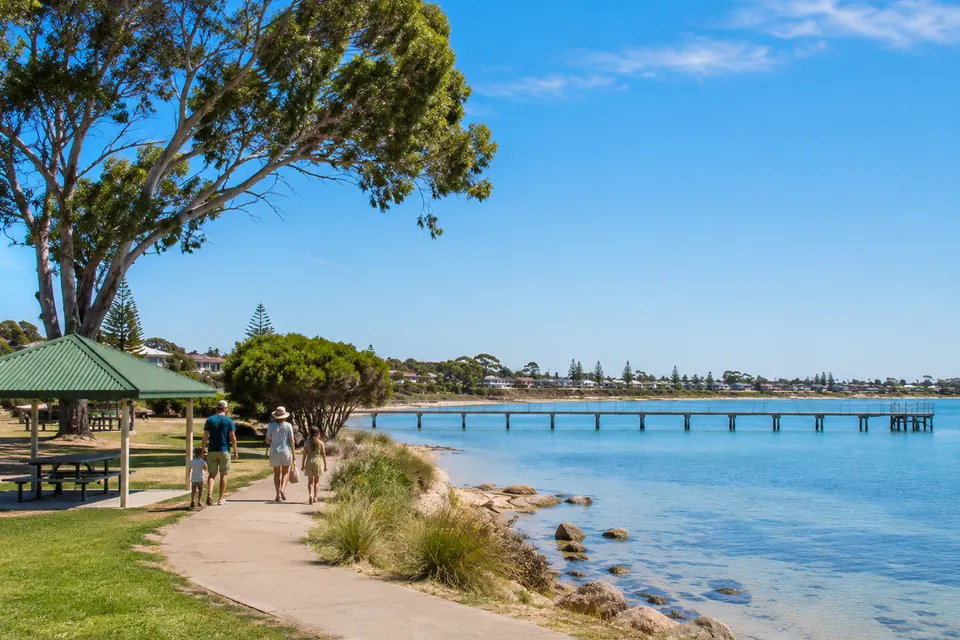
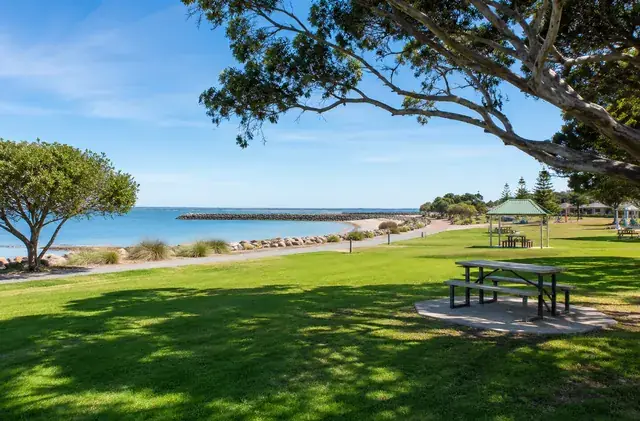
Stansbury foreshore and jetty beside the sheltered waters of Oyster Bay
No boat required

Two shore-based ways to target Blue Swimmer Crabs

Stansbury lets you switch between raking the Oyster Bay shallows and using legal hoop or drop nets from the jetty. That makes it useful for visitors who want a Yorke Peninsula crabbing session without planning the whole trip around launching a boat.

Rake the flats or stay dry on the jetty
Gulf St Vincent side

Sheltered Oyster Bay water close to town

Stansbury sits on the eastern side of Yorke Peninsula on Gulf St Vincent. Its gently shelving foreshore, sandy shallows and seagrass edges suit the habitat and methods commonly associated with Blue Swimmer Crab fishing.

Useful combination: shallow access + a town jetty
Easy trip planning

Jetty, foreshore and all-tide boat ramp in one town

If you are staying in Stansbury, you can choose a shore session, jetty session or launch from the all-tide boat ramp without moving to another town. That flexibility is the main reason Stansbury deserves its own place within the wider Yorke Peninsula crabbing picture.

Best advantage: method choice, not a promised catch

Raking, jetty nets or a boat: which suits your Stansbury trip?

Most active
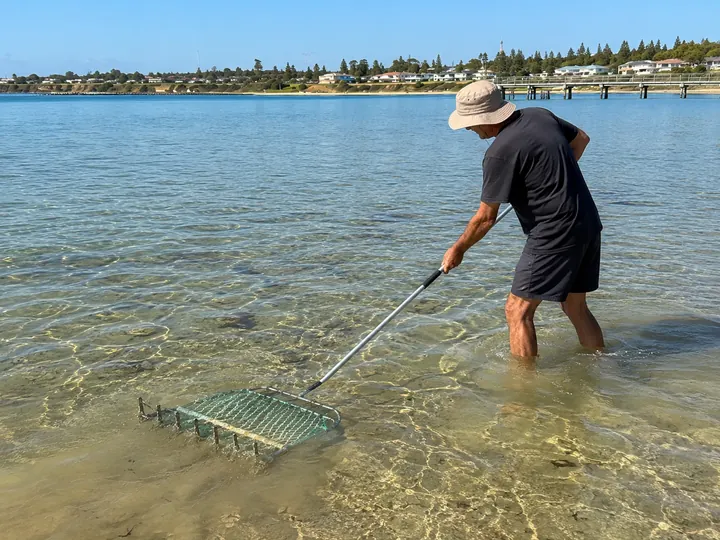
Crab raking in shallow clear water near the Stansbury foreshore

Rake the Oyster Bay shallows

Walk accessible shallow ground with a legal crab rake and watch the sandy and seagrass edges carefully. This is the classic hands-on option when the tide and wind make wading comfortable.

Best fit: calm water around low tide
No wading
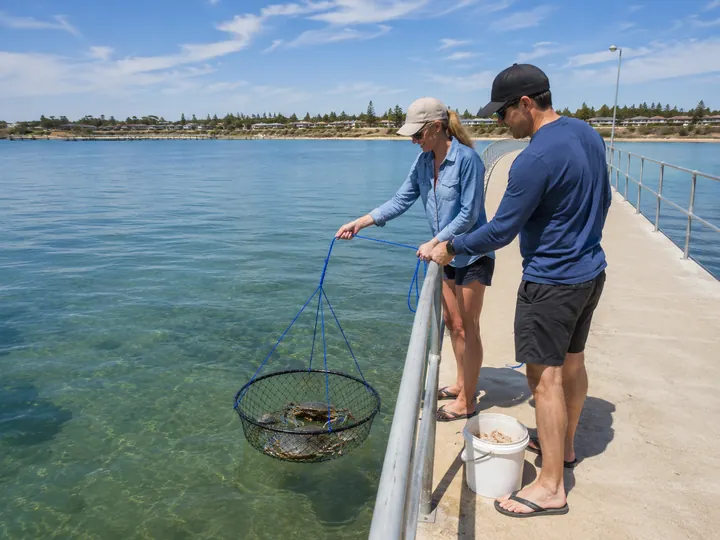
Crabbers lifting a hoop or drop net from a jetty over clear coastal water

Use drop or hoop nets from Stansbury Jetty

Lower legal nets from the jetty with fish-based bait, allow crabs time to find the bait, then retrieve the net vertically and check the catch immediately.

Best fit: visitors who prefer the jetty
More mobility
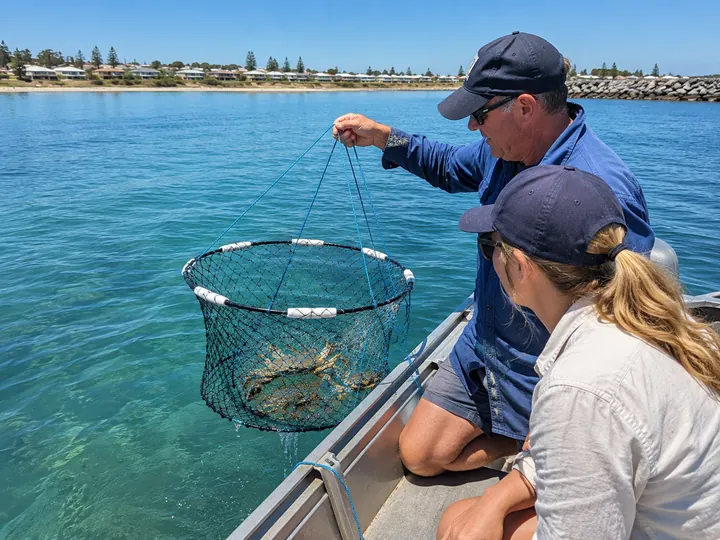
Blue Swimmer Crab net being lifted beside a small boat in sheltered coastal water

Net from a boat

Stansbury also has an all-tide boat ramp with boarding access, so boat-based crabbing can be added to a stay without moving to another town. A launch permit or ticket is required; a boat is useful, but it is not necessary for a worthwhile Stansbury crabbing session.

Best fit: anglers already launching locally

Where to go crabbing in Stansbury

Raking · shore based

Oyster Bay and the town foreshore shallows

The gently shelving water along Stansbury's foreshore is the obvious starting point for a rake. Low water gives easier access to the shallow ground, while calm conditions make it easier to see where sand, weed and bottom texture change.

Best forfirst-time raking and active searching
Conditionscalm, shallow water with comfortable visibility
Methodcrab rake + measuring gauge + bucket
Tideplan around lower water for easier access to the flats
Drop nets · hoop nets

Stansbury Jetty

The town jetty is the simplest option if you want to crab without wading. Local visitor information specifically identifies Blue Swimmer Crabs as a warmer-month catch from Stansbury Jetty.

Best fornetting while staying dry
Watch forwind, rope position and other jetty users
Methodlegal hoop or drop net
Baitfish or fish-based products only
Boat based · offshore

Stansbury spit sandbars offshore

Offshore sand channels around the submerged Stansbury spit are a boat-based option for Blue Swimmer Crab drop-netting during the warmer months. This is different from raking the town foreshore: water is deeper, conditions are more exposed and you should treat it as a boating session rather than a shallow-water walk.

Best forboaters looking beyond the jetty and town shallows
Approachwork legal nets over sand channels and move if the ground is unproductive
Methodboat-based hoop or drop nets
Rememberdepth, current and weather matter more offshore
Simple decision

Start with the method, not a secret spot

Stansbury crabbing is less about finding one exact metre of shoreline and more about choosing usable shallow ground for raking or setting a legal net correctly from the jetty. If the foreshore is windy and difficult to see through, the jetty may be the better choice; if the flats are calm and accessible, raking makes more sense.

Raking daycalm shallows + lower water
Jetty daylegal nets + clean rope management

When is the best time to go crabbing in Stansbury?

Think warmer water first, then choose the tide for your method

Stansbury's own visitor information describes Blue Swimmer Crabs as a warmer-month catch. Across Yorke Peninsula, October through April is commonly treated as the main crabbing window, with summer the clearest period to build a Stansbury trip around. Spring and early autumn can also produce, but crabbing is still variable: one good tide does not guarantee a catch.

Dec–Feb

Peak visitor window

Summer is the obvious period to build a Stansbury trip around Blue Swimmer Crabs.

Mar–Apr

Early autumn

Warm coastal water can keep crabbing worthwhile after the main holiday peak.

Oct–Nov

Building into the main season

Crab activity generally improves as the eastern gulf warms, leading into the stronger summer window.

Winter

Lower priority

Do not plan a winter Stansbury trip around crabbing alone; the town has stronger cold-season fishing options.

Best tide for raking

Low water is the useful starting point. It makes the shallow eastern-gulf flats easier to reach and search with a rake. You do not need to chase the absolute lowest tide: comfortable water depth, clear visibility and manageable wind are more important than forcing a session into poor conditions.

Best tide for jetty nets

Jetty netting is different. You are not trying to expose shallow ground, so there is no single universal tide answer. Focus on keeping the net sitting correctly, avoiding excessive current and managing ropes safely around other people.

Stansbury foreshore beside the sheltered waters of Oyster Bay

Check coastal conditions before you go

Crabbing depends on more than the tide. Check wind, water clarity and any current South Australian fishing or coastal notices before setting out. Monitoring continues after the 2025–26 Karenia algal bloom; avoid abnormally foamy or discoloured water and follow current health or fishing advice if local conditions change.

For a simple decision on the day: clear water, manageable wind and a method that suits the tide are more useful than forcing a session because the calendar says it is crab season.

Blue Swimmer Crab size, bag limits and protected females

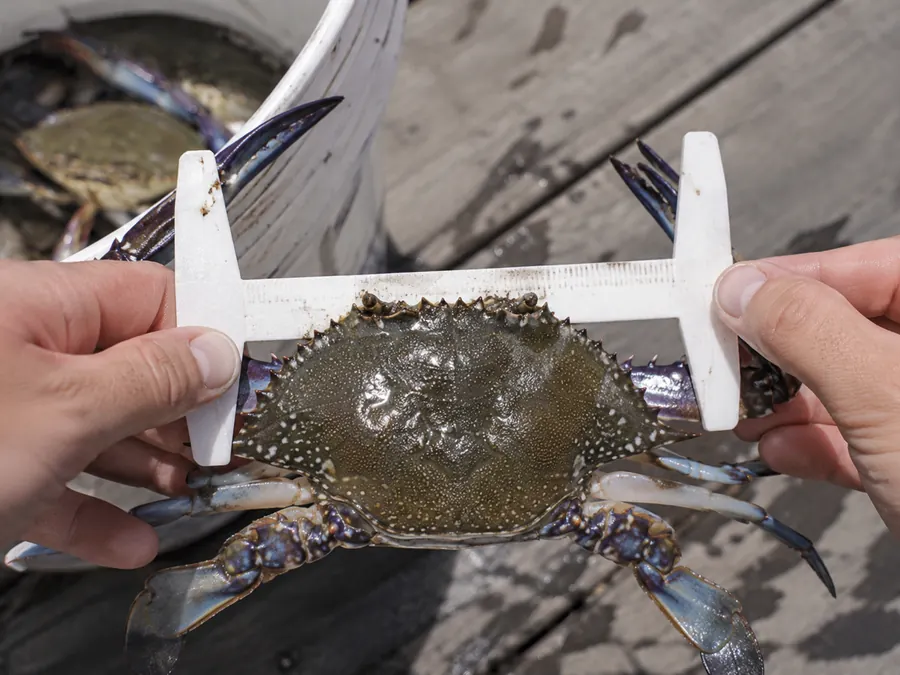
Blue Swimmer Crab being measured across the carapace with a crab gauge

Minimum size: 11 cm

Measure across the carapace from the base of one of the largest side spines to the corresponding point on the other side.

Daily bag limit: 20

The current recreational personal limit for Blue Swimmer Crabs in Gulf St Vincent is 20 per person per day.

Daily boat limit: 60

The current Gulf St Vincent recreational boat limit is 60 when three or more people are fishing from the boat. With one or two fishers, each person's bag limit applies.

Measure immediately

Crabs must be measured as soon as they are caught. Return undersized crabs to the water immediately.

Egg-bearing females

Females carrying external eggs are totally protected and must be returned to the water immediately.

Blue + Sand Crab limits combine

Blue Swimmer Crab and Sand Crab numbers are subject to combined limits. Sand Crabs also have their own lower Gulf St Vincent limit, so do not assume you can take a full limit of each species.

Blue Swimmer Crab11 cm minimumUp to 20 per person, counted together with Sand Crabs.
Sand Crab10 cm minimumUp to 10 per person in Gulf St Vincent, within the combined crab limit.
Per person20 crabs combinedBlue Swimmer + Sand Crabs together; no more than 10 may be Sand Crabs.
Boat — 3+ fishers60 crabs combinedNo more than 30 may be Sand Crabs. With 1–2 fishers, personal bag limits apply.

Protected females: any Blue Swimmer Crab or Sand Crab carrying external eggs must be returned to the water immediately.

Current rules note: the Gulf St Vincent and Kangaroo Island Blue Swimmer Crab bag limit is 20 per person per day. The boat limit is 60 when three or more people are fishing from the boat; with one or two fishers, each person's personal bag limit applies. The personal limit was temporarily reduced to 10 during the algal-bloom response before returning to 20 in May 2026, so older screenshots and forum posts may show a lower figure. Recheck current South Australian fishing limits before your trip because temporary restrictions can change.

What to bring for crabbing in Stansbury

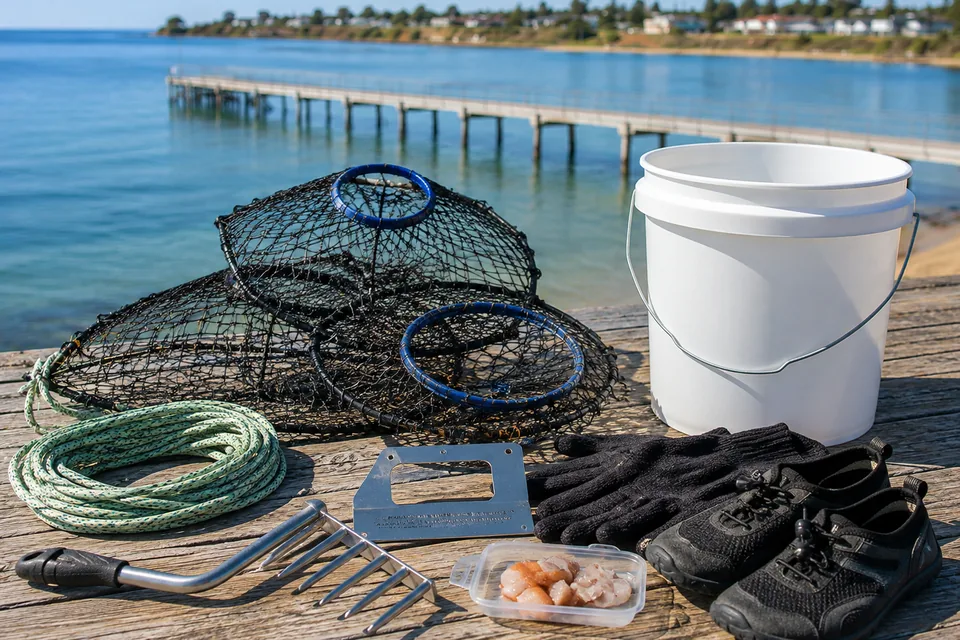
Crabbing gear for Stansbury including drop nets, crab rake, rope, gauge, bucket, gloves, footwear and fish-based bait

For crab raking

Bring a legal crab rake, measuring gauge, bucket or crab trolley, closed footwear, sun protection and drinking water. Polarised sunglasses can make shallow-water visibility easier.

Most important: gauge + closed footwear

For jetty drop nets

Bring compliant drop or hoop nets, suitable rope, fish-based bait, a measuring gauge, bucket and gloves or tongs. Keep ropes organised so they do not create a problem for other jetty users.

Most important: legal net + legal bait

For every method

Carry the measuring device where you can reach it immediately. Measure first, keep second. Keep count from the first legal crab rather than trying to reconstruct your catch later.

Most important: measure and count as you go

Can you use chicken as crab bait in South Australia?

No — not in hoop or drop nets in marine waters. Current South Australian rules allow fish or fish-based products in these nets and prohibit meat, chicken and other poultry. Old forum advice suggesting chicken should not be followed.

Drop nets

Up to three per person

A legal drop net has a maximum hoop diameter of 107 cm and maximum depth of 92 cm. Up to three drop nets per person are permitted.

No registration required; marking rules still apply
Hoop nets

Different limits apply

Hoop nets are not the same as drop nets. Up to 10 may be used when no other fishing device is being used; lower limits apply when combining gear.

If mixing hoop and drop nets, combined total: 3
Do not use

Crab traps are prohibited

South Australia lists crab traps as illegal fishing gear. Use permitted crab rakes, hoop nets or drop nets that meet the current specifications.

Legal device choice matters as much as catch limits

How to rake or use a drop net for Blue Swimmer Crabs

Crab rake

Work the shallows slowly

Start where the water is shallow enough to move comfortably and visibility is reasonable. Walk slowly and watch the sand, weed edges and small changes in bottom texture rather than covering ground as fast as possible. When you locate a crab, keep the rake under control and bring the crab clear of your feet before handling it. Measure it immediately and release it straight away if it is undersized or carrying external eggs.

Good raking is deliberate, not fast
Drop net

Keep the net fishing flat

Secure legal fish-based bait in the net, lower it carefully so it settles flat, and give crabs time to approach. When retrieving, lift smoothly and as vertically as practical so crabs are less likely to escape over the edge. Check the catch, measure every crab immediately and return anything that cannot legally be kept before setting the net again.

Flat on the bottom · smooth vertical retrieve
Handling

Keep hands away from the claws

Blue Swimmer Crabs can grip hard. Use the rake, suitable tongs or careful handling rather than reaching between the claws. Keep retained crabs shaded and managed appropriately, and do not leave undersized or protected crabs sitting in a bucket while you continue fishing. Release them immediately where they were caught.

Measure first · handle calmly · release quickly

A simple first-time Stansbury crabbing plan

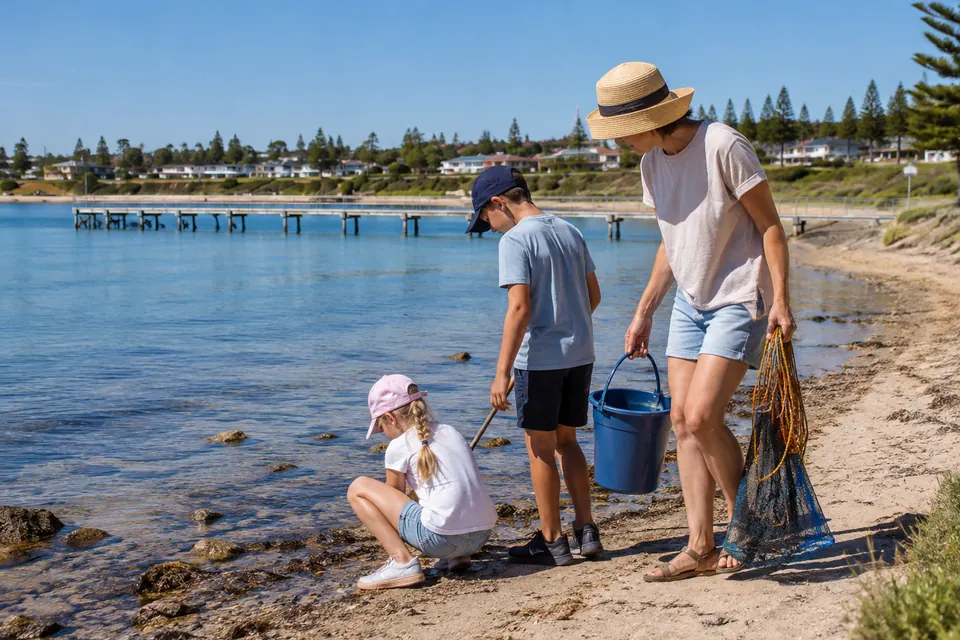
Family preparing for a shore-based crabbing session beside the calm Stansbury foreshore

1. Check weather and tide

For raking, choose a calm lower-water window. If visibility or wading conditions look poor, consider the jetty instead.

2. Pick one method

Decide before leaving whether you are raking the shallows or carrying legal nets to the jetty. Pack for that method rather than everything at once.

3. Put the gauge in reach

Do not bury your measuring device at the bottom of the gear bag. Every crab needs to be checked as soon as it is caught.

4. Use legal bait

If you are using hoop or drop nets, take fish or fish-based bait — not chicken, poultry or other meat.

5. Release quickly

Return undersized crabs and any female carrying external eggs to the water immediately.

6. Take what you will use

The legal limit is a maximum, not a target. Keep count and stop when you have enough for your needs.

For families: choose shallow, manageable water, light wind and good visibility. Children should stay within an adult's immediate reach while wading, and closed footwear is the practical choice on a natural seabed.

Questions about Stansbury and Yorke Peninsula crabbing

Is Stansbury good for crabbing?

Yes. Stansbury is a recognised Yorke Peninsula Blue Swimmer Crab location where crabs can be raked from the shallows or netted from the jetty or a boat in season.

Where can I rake Blue Swimmer Crabs in Stansbury?

The shallow water along the Stansbury foreshore in Oyster Bay is the main shore-based raking area. Lower water makes the flats easier to access.

Can you catch Blue Swimmer Crabs from Stansbury Jetty?

Yes. Local Stansbury visitor information specifically identifies Blue Swimmer Crabs as a warmer-month catch from the jetty.

What is the best time of year for Stansbury crabbing?

The warmer months are the main season. Summer is the strongest visitor window, with spring and early autumn also worth considering when conditions are suitable.

What is the best tide for crab raking in Stansbury?

Low water is the useful starting point because it gives easier access to shallow ground. Calm water, safe depth and good visibility matter more than chasing the absolute lowest tide.

What size must a Blue Swimmer Crab be in South Australia?

The current minimum legal size is 11 cm across the carapace, measured from the base of the largest side spines.

How many Blue Swimmer Crabs can I keep?

The current Gulf St Vincent recreational limit is 20 per person per day. A boat limit of 60 applies when three or more people are fishing from the boat; with one or two fishers, each person's bag limit applies. Combined Blue Swimmer Crab and Sand Crab rules also apply.

Can I use chicken in a crab net?

No. In South Australian marine waters, hoop and drop nets may use fish or fish-based products, but not meat, chicken or other poultry.

How many drop nets can I use?

Up to three legal drop nets per person are permitted. If you combine hoop nets and drop nets, the combined total is limited to three at the same time.

Can I go crabbing in Stansbury without a boat?

Yes. That is one of Stansbury's main advantages for a Yorke Peninsula crabbing trip: you can rake accessible Oyster Bay shallows or use legal hoop or drop nets from Stansbury Jetty without launching a boat.

Is Stansbury a good base for Yorke Peninsula crabbing?

Yes if convenience and method choice matter. Stansbury combines shallow-water raking, jetty netting and an all-tide boat ramp in the same town. Other Yorke Peninsula locations can also produce Blue Swimmer Crabs, but Stansbury is particularly practical for visitors who want several options close together.

What if I catch a Sand Crab?

Do not measure or count it as though it were automatically a Blue Swimmer Crab. Sand Crabs have a 10 cm minimum size in South Australia and a lower Gulf St Vincent species limit, while combined crab limits also apply.

Do I need a fishing licence to go crabbing in Stansbury?

No recreational fishing licence is required for marine fishing in South Australia. You still have to follow the current size, bag, boat, gear, bait and closure rules that apply to the place and method you are using.

Should I check algal bloom or coastal conditions before crabbing?

Yes. Check current coastal and fishing notices before you go, especially after periods of unusual water colour, foam or marine-life impacts. If the water looks abnormal, do not rely on season or tide alone—follow the latest South Australian health and fishing advice.

Plan the rest of your Stansbury visit