
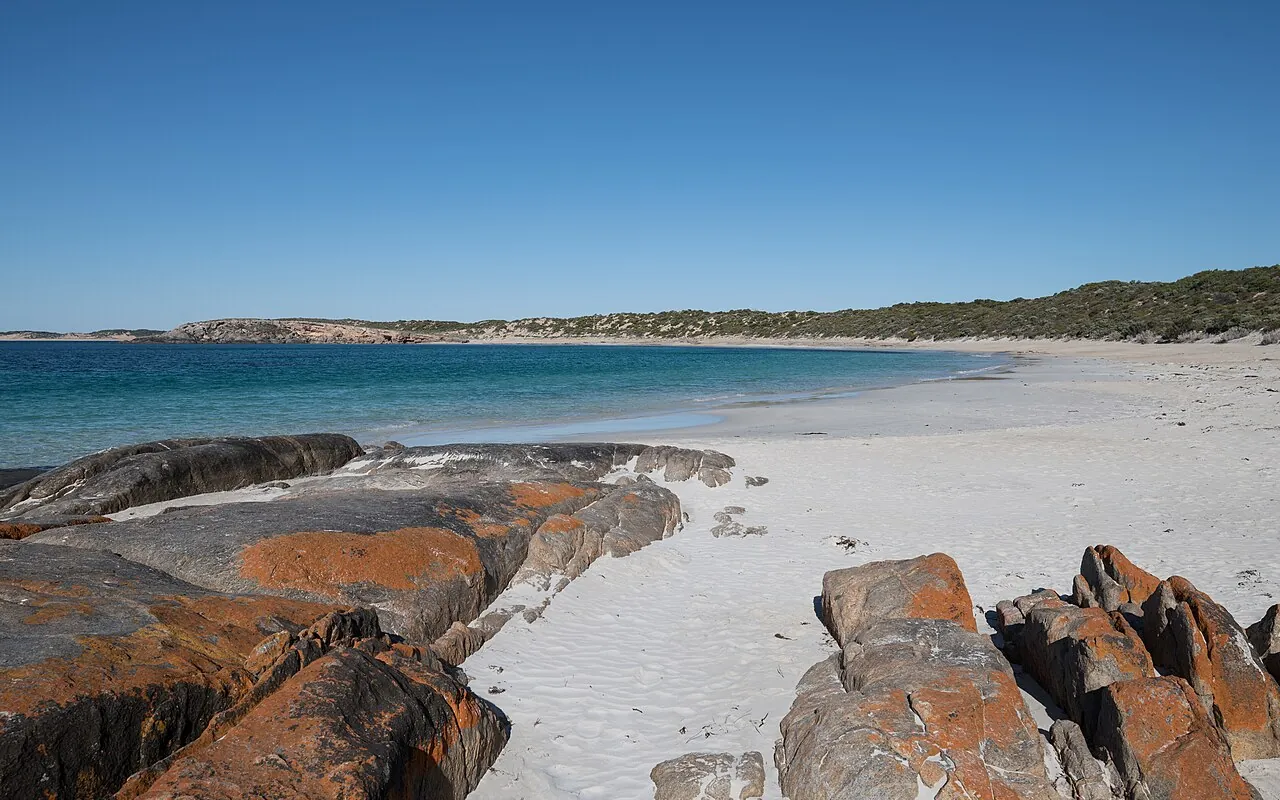
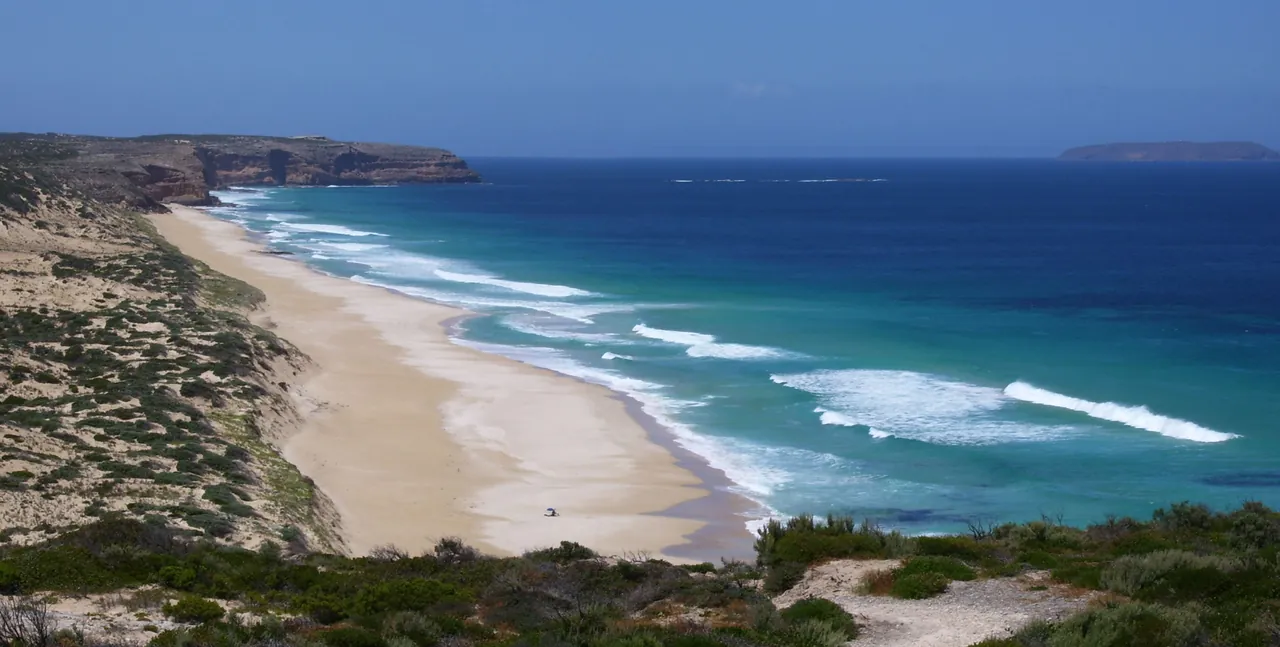
Flaherty Beach
Wide pale sand, shallow water and sandbar colour. A strong first choice when the beach itself is the destination.
Beaches & coast
Choose the beach for the day you actually want
The peninsula has family bays, drive-on sand, remote west-coast beaches and powerful surf breaks. This page separates them by use, access and trade-offs so a beautiful photo does not send you to the wrong coast.
Yorke Peninsula has more than 700 kilometres of coastline, so a single “best beach” ranking is not especially helpful. Flaherty Beach can be spectacular for shallow turquoise water, Berry Bay makes more sense for surfers and coastal scenery, Port Vincent is easier for a family that wants shops and a town beach, and Dolphin Beach belongs to a full day inside Dhilba Guuranda–Innes National Park.
The right choice depends on five things: how protected the water is, whether you need facilities, how much driving you want, whether surf is a feature or a problem, and whether the beach is the whole destination or only one stop in a broader road trip. The sections below make those differences explicit, including the drawbacks that glossy beach lists usually leave out.
Wide pale sand, shallow water and sandbar colour. A strong first choice when the beach itself is the destination.
Long shallow shoreline with the council bush campground behind the dunes and Walk the Yorke running through the area.
A scenic Corny Point-area beach associated with surfing and one of the peninsula’s most memorable coastal drives.
A sheltered town beach with clear water, a pontoon and food, accommodation and other services close at hand.
Sandy, protected and well suited to families, with a natural swimming pool about 200 metres south of the settlement.
More than two kilometres of broad white sand and one of the peninsula’s best-known beaches where vehicle access is part of the experience.
Soft white sand and relatively protected turquoise water inside Dhilba Guuranda–Innes National Park.
Pair a sandy beach with the Blue Pool at the northern end, a distinctive swimming stop inside the national park.
Long, consistent waves and a strong surf identity. Better for surfers and coastal exploring than a casual first-time family swim.
Start with protected or shallow options before exposed southern beaches.
Port Vincent · Hardwicke Bay · Port RickabyIf the visual beach experience matters more than town facilities, look west.
Flaherty · Wauraltee · Port RickabyThe south and south-west are the stronger shortlist; conditions and experience matter.
Berry Bay · Pondalowie · Chinaman’sChoose places with established camp options rather than assuming beach camping is allowed.
Wauraltee · Pondalowie · Dhilba Guuranda–InnesBest when food, fuel, toilets and accommodation need to stay easy.
Port Vincent · North Beach / Wallaroo · Moonta BayUse beaches as part of a broader coastal route rather than chasing a single swim.
Berry Bay · West Cape · Shell Beach · FlahertySome of the most famous fishing beaches are not the best first choice for swimming.
Browns Beach · Pondalowie · west-coast beachesChoose a beach that connects naturally to nearby scenery, walking and towns.
Dolphin Beach · Berry Bay · Port VincentStay on the east side rather than crossing the peninsula only for a swim.
Stansbury foreshore · Port Vincent · Edithburgh coastFlaherty is one of the beaches that earns the “turquoise Yorke Peninsula” reputation. Its appeal is the combination of broad pale sand, shallow-looking water and open space between Point Turton and Hardwicke Bay.
Wauraltee works especially well when beach time and simple coastal camping belong in the same trip. Walk the Yorke crosses this stretch, describing long wide beaches, shallow crystal-blue water and dunes along the shore.
Berry Bay sits on one of the peninsula’s best scenic coastal drives near Corny Point. The area is promoted for surfing, and the approach combines open-ocean views with the lighthouse country around the north-western “toe” of the peninsula.
Port Vincent is the simplest recommendation when a group wants a genuine beach day without giving up town convenience. The protected bay is used for swimming, sailing, boating and snorkelling, while the town beach and pontoon are popular with families.
Hardwicke Bay earns a place because it gives the western side a sheltered family option. The bay is associated with swimming, fishing, boating and windsurfing, and a natural swimming pool surrounded by reef lies roughly 200 metres south of the settlement.
Port Rickaby sits between long dune systems, with a shallow bay protected by reefs to the north and south. That geography is why it makes a much stronger family-swimming choice than many exposed western beaches.
North Beach is a broad white-sand beach more than two kilometres long and one of the remaining South Australian beaches where vehicles can access the sand. Wallaroo is only a few minutes away, which makes it unusually easy to combine beach time with full town services.
These two coastal areas work better as a combined choice than as isolated “best beach” rankings. They let you keep swimming, jetties and sunsets close to Moonta’s heritage attractions, shops and accommodation.
Park rangers single out Dolphin Beach as one of the most picturesque and reasonably protected places to swim inside Dhilba Guuranda–Innes National Park, with soft white sand and clear turquoise water.
Shell Beach is worth choosing when the day is about more than lying on sand. The Blue Pool at the northern end is one of the park’s best-known local swimming features, making this a strong scenic pairing with nearby viewpoints and walks.
Pondalowie is a surf-first recommendation. Park rangers describe long and consistent waves, and the area also connects naturally with camping, fishing and the western side of the national park.
Browns Beach belongs on this page because “best beach” means different things to fishers. Rangers specifically identify it for surf fishing and Australian salmon, which makes it important even though it is not the default recommendation for a relaxed swim.
Chinaman’s earns a place because it answers a specific question: where should experienced surfers look? Rangers describe a powerful left-hand break and big swell, explicitly placing it in the experienced-surfer category.
Stansbury is not included because it beats Flaherty or Dolphin for pure beach spectacle. It belongs because it is one of the simplest places to combine calm waterfront time with a jetty, coastal walk, museum, food and an onward east-coast itinerary.
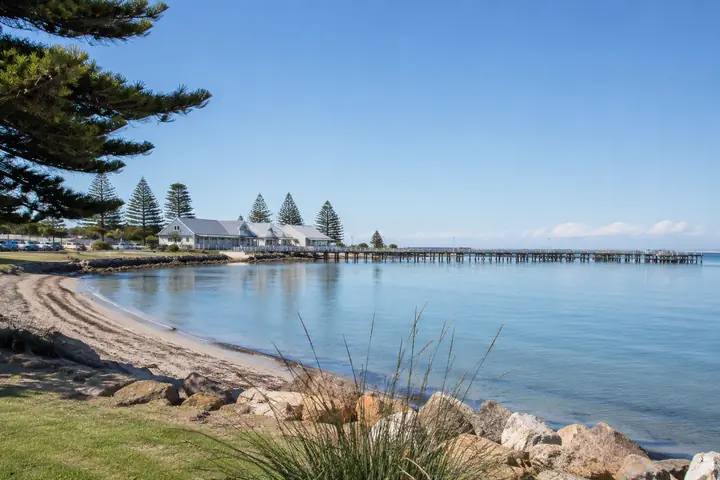
Port Vincent and Stansbury suit travellers who want swimming or waterfront time without giving the entire day to the beach. They are also convenient choices when food, fuel, toilets and another attraction need to stay close.
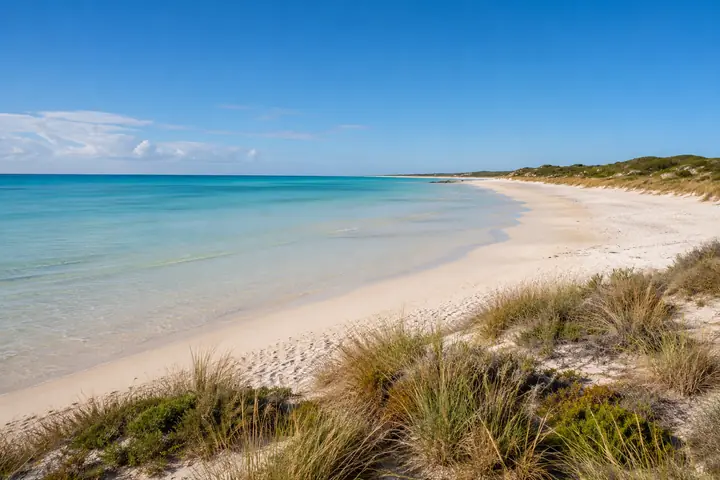
Flaherty, Hardwicke Bay, Wauraltee and Port Rickaby let you build a west-coast beach day while staying north of the peninsula’s most remote southern driving.
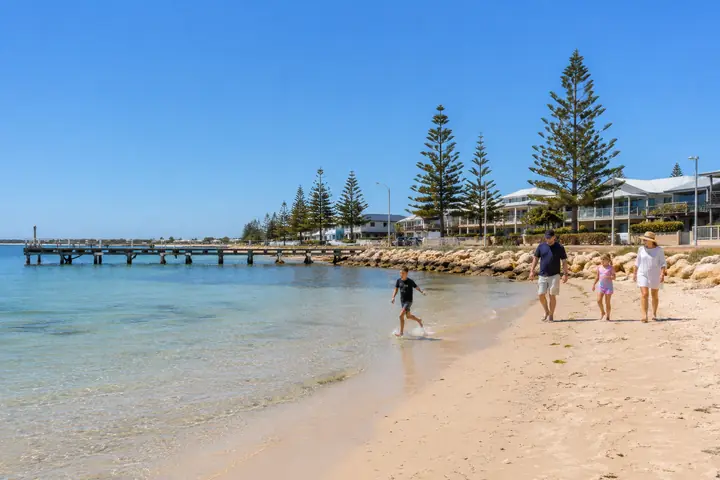
North Beach, Moonta Bay and Port Hughes make sense for travellers who want a beach every day but also want restaurants, shops, heritage and larger accommodation choices nearby.
Dolphin, Shell, Pondalowie, Browns and Chinaman’s should not be squeezed into the end of another day. Dhilba Guuranda–Innes works best when Marion Bay is the launch point and beaches are combined with lookouts, Inneston or a walk.
Some of the most photogenic places face more exposed water. Dolphin Beach is a stronger park swimming shortlist than Pondalowie or Chinaman’s, while Port Vincent and Hardwicke Bay are simpler choices when protection and family use matter.
Wauraltee has an established council bush campground behind the dunes. Current camping and beach-access rules should be checked before arrival rather than inferred from older photos or social posts.
Pondalowie and Chinaman’s deserve to rank highly for surfers, but that does not make them universal winners. Separate surf intent from swimming intent before choosing.
If you have only a few hours, Port Vincent, Stansbury or the Copper Coast can deliver more total value than spending half the day driving to a remote beach and back.
Best when swimming is one part of the day rather than the only goal.
Best when pale sand, water colour and open coastline are the priority.
Best when the national park is the destination.
Wind, swell, tide, road access and water quality can change the right answer. In July 2026, South Australian monitoring has reported localised chlorophyll increases in parts of Spencer Gulf including near Hardwicke Bay, Balgowan and the Wallaroo–Port Davis coast. That does not mean every nearby beach is closed; it means current official advice matters more than an evergreen ranking.
There is no single winner for every trip. Flaherty stands out for shallow turquoise water, Port Vincent is easier for families, Berry Bay and Pondalowie suit surf-oriented days, Wauraltee pairs well with coastal camping, and Dolphin Beach is a top national-park swimming pick.
Port Vincent, Hardwicke Bay and Port Rickaby are strong starting points because they are associated with sheltered or shallow water. North Beach near Wallaroo is also popular with families and has major town facilities close by.
Water colour changes with weather and light, but Flaherty, Wauraltee and several Dhilba Guuranda–Innes beaches are the places most likely to match the pale-sand, turquoise-water image people associate with Yorke Peninsula.
Berry Bay, Pondalowie Bay and Chinaman’s are stronger surf-oriented choices. Chinaman’s is specifically associated with powerful swell and experienced surfers, so it should not be treated as a beginner recommendation.
Dolphin Beach is the best all-round swimming and scenery choice. Shell Beach adds the Blue Pool, Pondalowie is better known for surf and fishing, and Browns Beach is particularly associated with surf fishing.
There is a council bush campground behind the dunes at Wauraltee. The campground and beach are separate areas, so check current council permits and rules rather than assuming camping directly on the beach is allowed.
North Beach is one of the Yorke Peninsula beaches known for vehicle access onto the sand. Conditions and rules can change, so check current access information and consider tide and sand conditions before driving on the beach.
For an easy local day, use Stansbury’s own foreshore and Oyster Bay or drive to Port Vincent. For a bigger “beach destination” day, cross toward Hardwicke Bay, Flaherty or the western coast rather than trying to force every type of beach experience into Stansbury itself.
Two or three nearby beaches is usually enough. The peninsula is larger than it looks on a map, and repeated cross-peninsula driving can turn a beach day into a car day.
Many are popular swimming beaches, but safety changes with wind, swell, tide, rips and water quality. Use local signs and current South Australian marine advice; avoid discoloured or foamy water and do not treat a “best beaches” list as a substitute for conditions on the day.